

In 2022, we
collected
over 80
anonymous testimonies
through our
story-sharing
platform
hosted
by our
partner
Drugs
and
Me.
Testimonies
were
analysed to
provide a
clearer
picture
of young
people's
lived
experiences
with
benzos,
which is
detailed in
our
2022
report.
These
experiences
continue to
direct our
outreach and
harm
reduction
work.
In December
2025, we
launched a
follow-up
study
focusing on
platforming
the voices
of young
people in
Scotland who
take benzos.

Share your story!
We're looking for Scottish young people to share their experiences with benzos – click here to get involved.
Who are we?
The Benzo Research
Project
(BRP) is a young
people-led
small
charity which seeks to
understand and improve
the
lives of young people
who take
benzodiazepines across
the
UK through research,
policy
advocacy, and advancing
harm reduction education
and support
provision.
Although from over 30 different nationalities and interdisciplinary backgrounds, we share the desire to improve the lives of young people who take benzodiazepines. Several of our members are past and present volunteers with Students for Sensible Drug Policy (SSDP). Since July 2021, we have invested over 5,000 hours voluntarily into this project. |
|
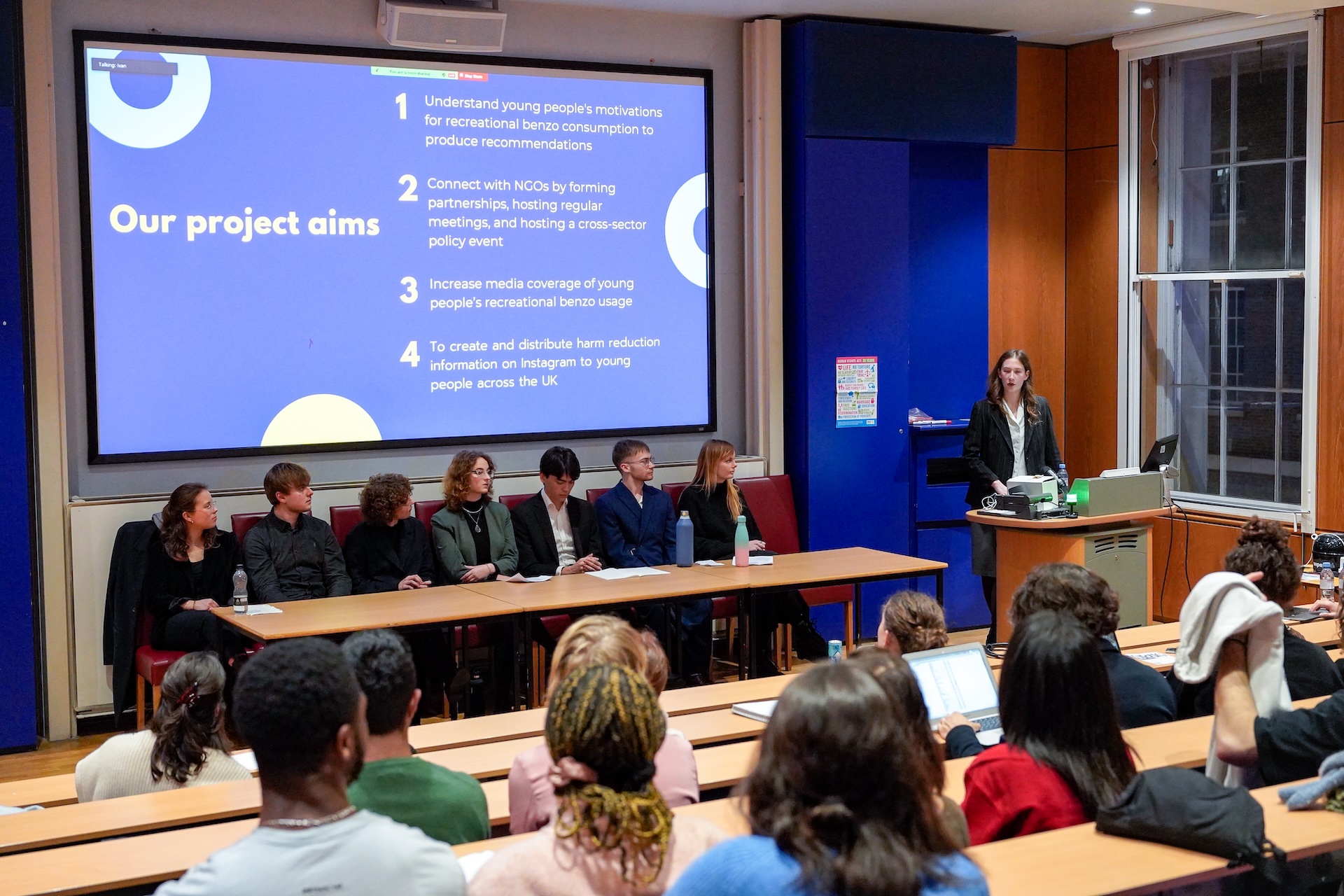
What are our aims?Since
starting
this
project, we
have formed
eight key partnerships
with
stakeholders
and
organisations
relevant to
our
cause.
Knowledge
sharing is
crucial to
improving
local
services and
emerging
issues.
We also want
to
build social
media
relationships
to
help grow
each
others'
accounts
and share
information.
We believe that the growing benzo problem in the UK is under-reported, and young people's voices and experiences aren’t heard in the conversation. We advocate for journalists to write articles that are informed by lived experiences, are unbiased and non-judgemental, so as to not demonise people who use drugs. Public opinion is a significant factor in UK drug policy decisions, making the media an important frontier for driving positive change. Our social media team shares harm reduction and policy-related information on Instagram (@benzoresearchproject), Twitter (@benzoresearch), and TikTok (@benzoresearchproject). We have reached over 60,000 unique Instagram accounts, demonstrating demand for evidence-based harm reduction content tailored to young people. |
|
|
|
|
Facts and figures
|
In 2024, over 1200 benzo-related
deaths were recorded in Britain: 629
people in England and Wales, and 574 people
in Scotland.
– Office for National Statistics, 2025; National Records of Scotland, 2025. |
|
In 2022, 2.2 million young
people who experienced challenges with drug
use did not access any support in the
UK.
– The Mix, 2022. |
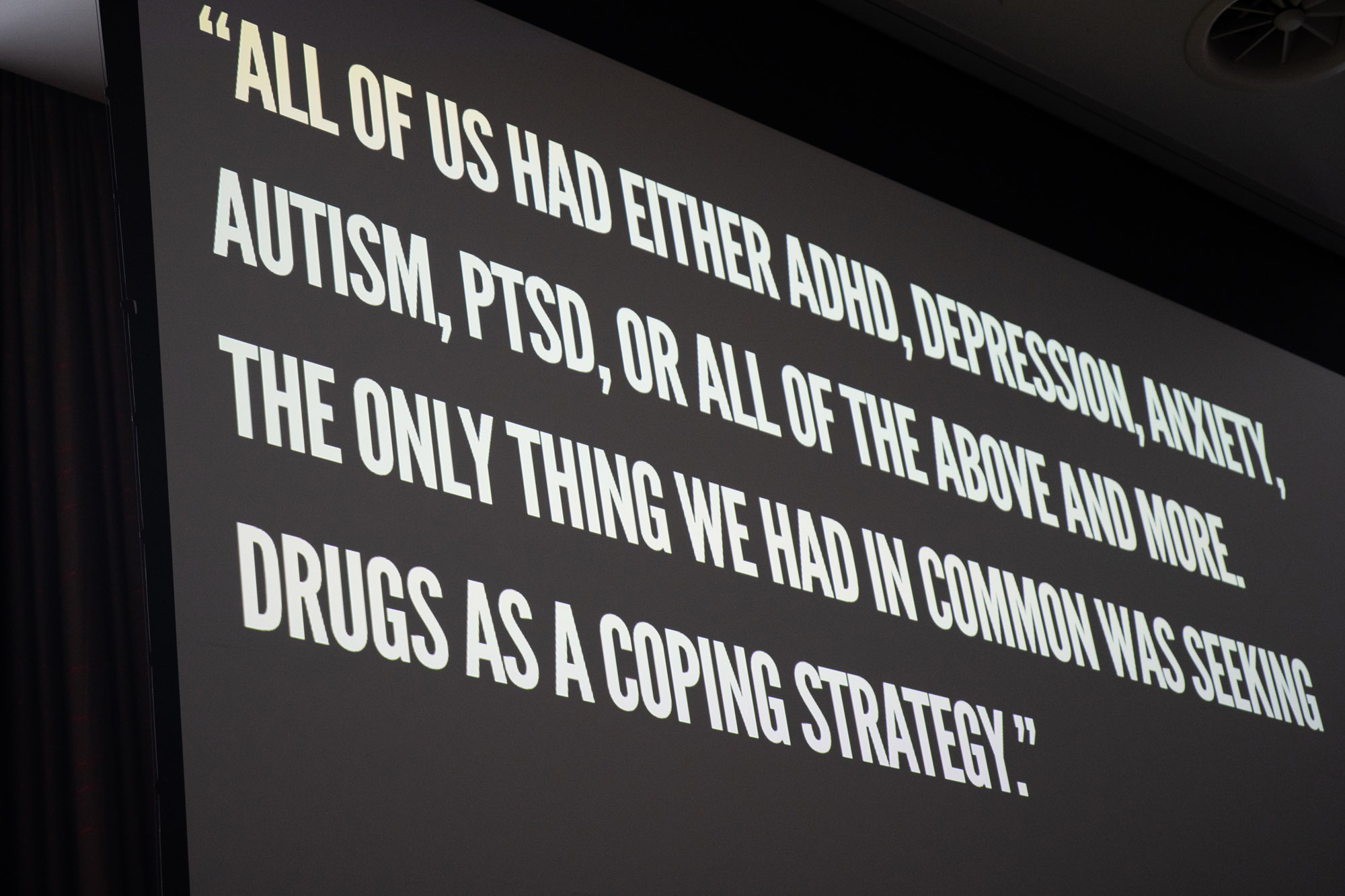
Photo by Nigel Brunsdon, HIT
Hot Topics 2025.
|
Our previous work found young people took
non-prescription benzos to manage mental
health difficulties, to cope with
life changes and the COVID-19 pandemic, to
enhance the effects of alcohol, or to
counteract stimulants and
psychedelics.
– Bright, Martin, Mori, and Richards, 2022. |
29.3% of
those
having taken a benzo or Z-drug under medical
instruction
have also used the same drug
non-medically.
– Kapil et al., 2014. |
|
LET'S TALK
|
|
We want to hear from you!
Feel free to
reach out regarding
partnerships, events,
sponsorships,
conferences,
or
questions.
Email: hello@brp.org.uk |
|
|
|
|